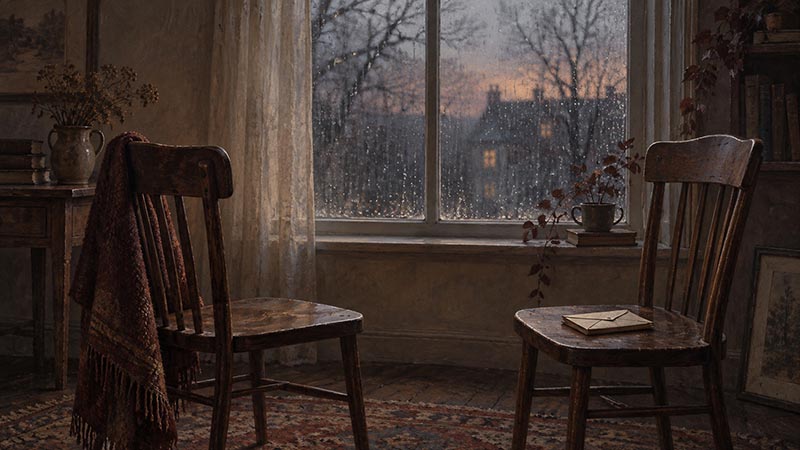
I recently came across the term disenfranchised grief. It describes grief that is real and profound, but not fully recognized or understood by the people around you.
Someone who had been important to me for my entire adult life died. To most people, she was an old friend. That is true, but it is also painfully incomplete.
There was no simple name for what existed between us. There were feelings that lasted for years, words spoken at the wrong times, possibilities that were never explored, and choices that cannot be changed now. Most of that history was private. I do not think anyone else knows the whole story.
When someone dies, people usually understand who has the right to fall apart. A spouse. A parent. A child. A sibling. Their grief has a recognized place.
But what happens when you lose someone you loved deeply without ever having occupied one of those recognized roles?
You still lose them. You still wake up remembering that they are gone. You still replay old conversations and wonder what might have happened if one decision had been different. You grieve not only the person, but also every moment you never had and every future that can no longer exist.
Yet there is no obvious place to put that grief. You cannot explain its full weight without revealing things that belong to a complicated and deeply personal history. So the people around you may see sadness, but they cannot understand why it reaches so far into you.
That may be the loneliest part: carrying a loss whose true size is invisible.
Learning the term disenfranchised grief has not made the pain smaller, but it has helped me understand something. Grief does not need public recognition to be real. Love does not become insignificant because a relationship had no accepted name. And losing someone can break your heart even when the rest of the world never knew that a part of your heart had always belonged to them.